
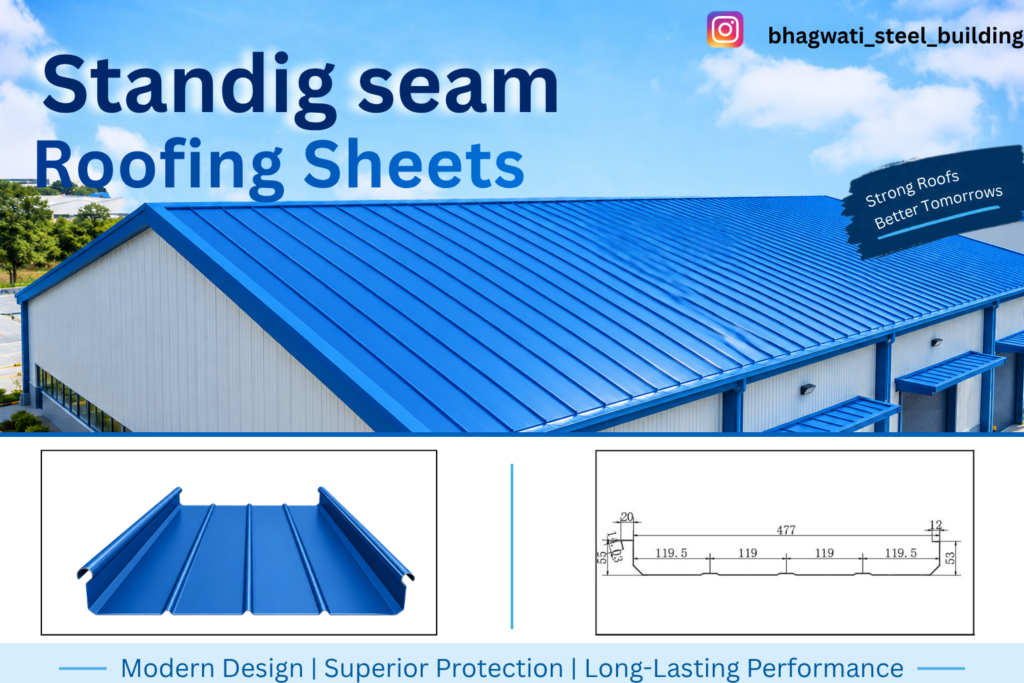
Standing Seam Roofing Sheets offer a modern, durable and weather-resistant roofing solution for factories, warehouses, commercial buildings and Pre-Engineered Buildings (PEB). Their raised vertical seams and concealed fastening system create a clean roof appearance while helping manage rainwater effectively when properly designed and installed.
At Bhagwati Roofing Products, we help businesses explore suitable metal roofing solutions for industrial and commercial projects. Whether you are planning a new factory, expanding a warehouse or upgrading an existing roof, choosing the right standing seam roofing system can support long-term building performance.
What Are Standing Seam Roofing Sheets?
Standing Seam Roofing Sheets are metal roof panels with raised vertical joints that connect adjacent panels. These joints create a continuous roofing surface, while concealed clips secure the panels to the supporting structure without exposing conventional fasteners across the main roof panel surface.
Depending on the system design, standing seam panels can accommodate thermal movement and help reduce the risk of water entering through roof fastener penetrations. Proper panel profiling, flashing details, slope and installation play important roles in roof performance.
Key Benefits of Standing Seam Roofing Sheets
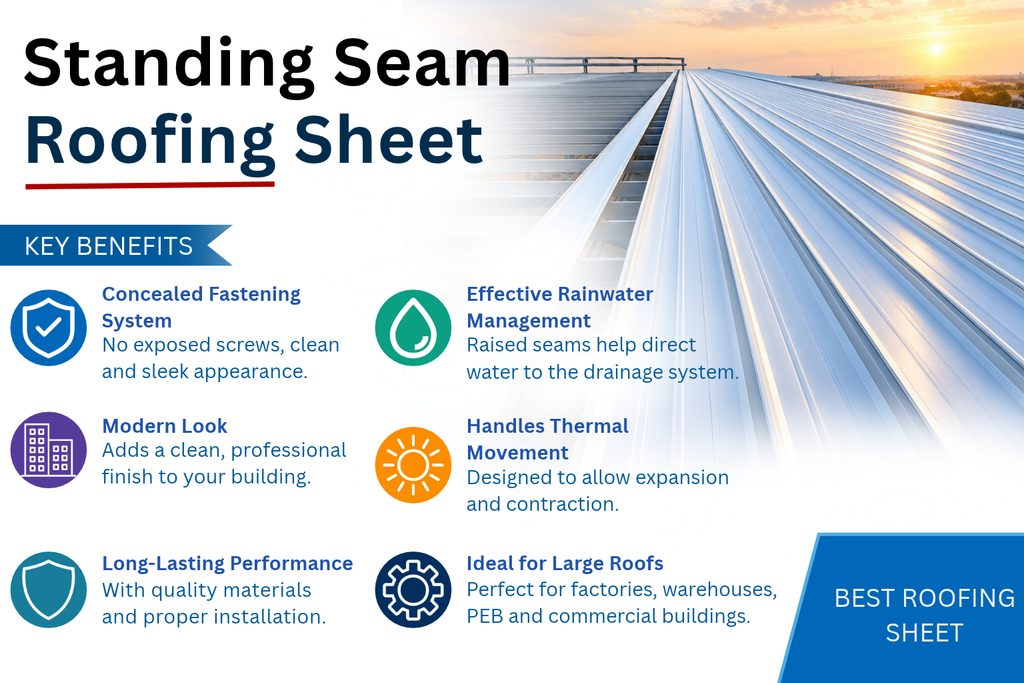
1. Concealed Fastening System
Standing seam roofing systems use concealed clips or fastening arrangements beneath the panels. This design reduces exposed fastener penetrations across the main roof surface and creates a neat, streamlined appearance.
2. Effective Rainwater Management
Raised seams help direct rainwater along the roof panels toward the drainage system. When the roof has the correct slope, suitable panel joints and properly installed flashings, the system can provide reliable protection against water ingress.
3. Modern Architectural Appearances
Standing seam metal roofing creates clean, continuous lines across the roof. It suits modern factories, commercial buildings, offices, showrooms and architectural projects that require an attractive metal roof finish.
4. Accommodation of Thermal Movement
Metal panels expand and contract as temperatures change. Suitable clips and correctly designed panel connections allow the roofing system to accommodate thermal movement, helping reduce stress on the roof assembly.
5. Suitable for Large Industrial Roofs
Standing seam roofing systems can suit large factories, warehouses, logistics facilities and PEB structures. The correct panel profile, material thickness, support spacing and fixing method depend on the project requirements and structural design.
6. Long-Term Roofing Performance
Quality-coated metal, suitable roof design and correct installation can help extend the service life of a standing seam roofing system. Regular inspections of seams, flashings, gutters and roof penetrations also support long-term performance.
Applications of Standing Seam Metal Roofing
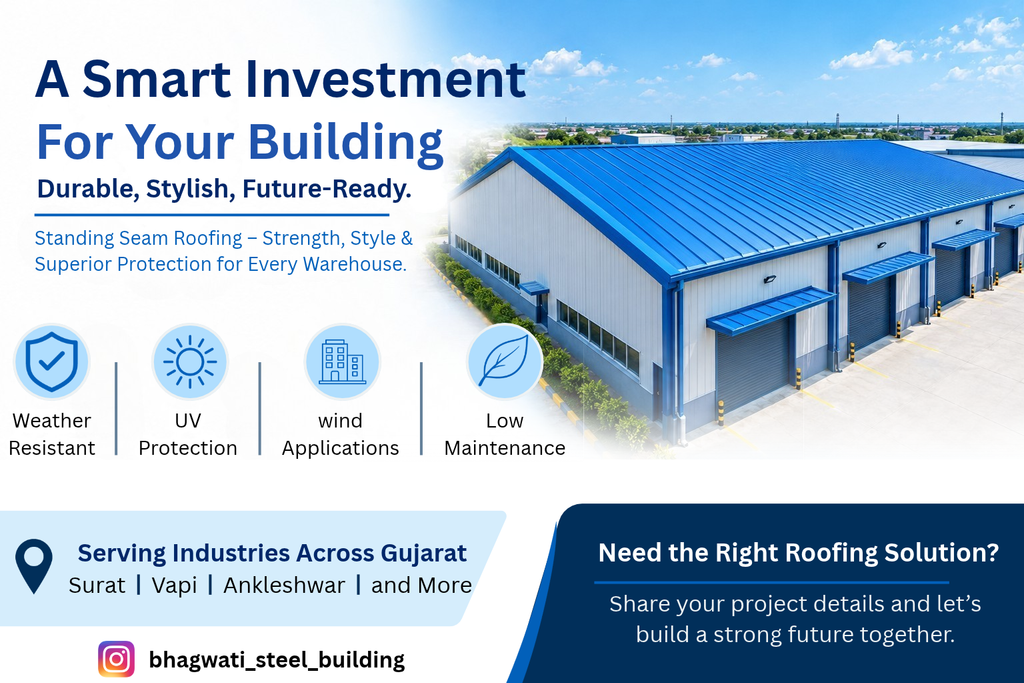
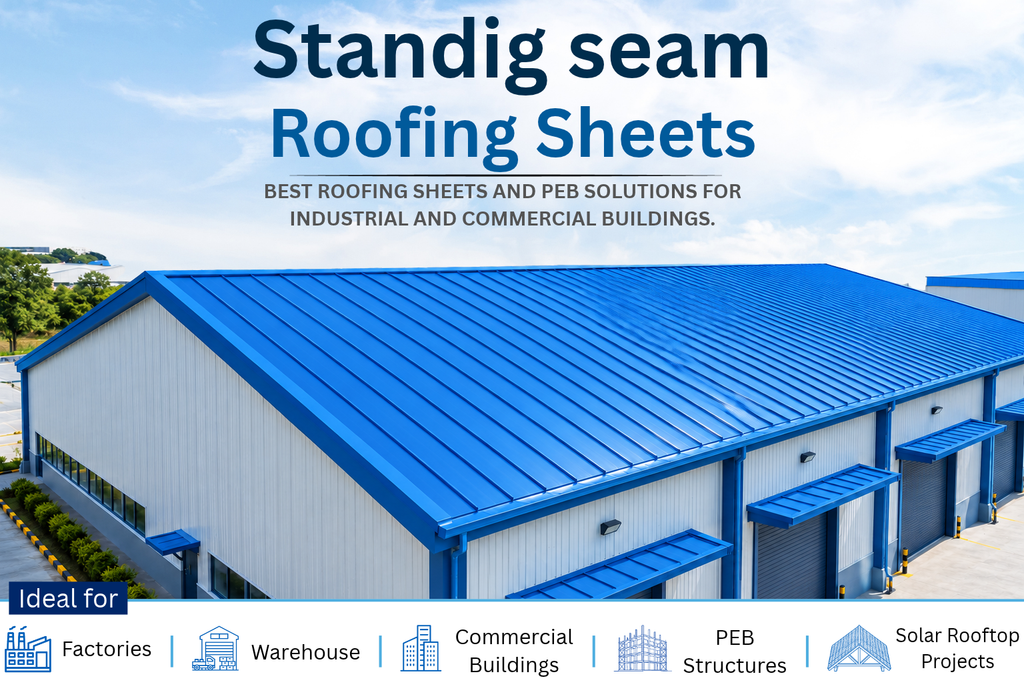
Standing seam roofing can serve a wide range of industrial and commercial applications, including:
- Industrial factories and manufacturing plants
- Warehouses and logistics centres
- Pre-Engineered Buildings (PEB)
- Commercial buildings and office complexes
- Workshops and industrial sheds
- Buildings with solar rooftop installations, subject to compatible system design
For industrial projects in Gujarat, the selection process should consider rainfall, wind loads, local environmental conditions and the building’s operational requirements.
Standing Seam Roofing Sheet Materials and Specifications
Manufacturers offer standing seam roofing panels in different materials, thicknesses, profiles and coating systems. Select the specifications according to the building design rather than choosing a panel based on thickness alone.
| Specification | What to Consider |
| Base material | Galvanized steel, coated steel or aluminium, depending on the system |
| Metal thickness | Select according to structural design, wind loads and support spacing |
| Panel profile | Choose the seam height and profile to suit drainage and project requirements |
| Coating | Consider corrosion resistance, appearance and the site’s environmental exposure |
| Panel length | Plan according to roof dimensions, transport and installation requirements |
| Roof slope | Confirm the minimum permitted slope for the selected roofing system |
| Fastening system | Use compatible clips and fasteners recommended for the panel system |
Always verify the manufacturer’s technical data and installation guidelines before finalizing the specifications.
Standing Seam Roofing Sheets vs Conventional Roofing Sheets
Standing seam roofing differs from conventional metal roofing in its joint design and fastening method.
| Feature | Standing Seam Roofing | Conventional Metal Roofing |
| Panel connection | Raised, interlocking or mechanically joined seams | Overlapping or profiled panel edges |
| Fastening | Typically uses concealed clips or system-specific fixings | Often uses exposed roofing screws |
| Roof appearance | Continuous, modern finish | Traditional corrugated or trapezoidal appearance |
| Thermal movement | Can accommodate movement when designed correctly | Depends on panel profile and fixing arrangement |
| Installation | Requires compatible components and trained installation | Depends on the panel and fastening system |
The best option depends on the project budget, roof geometry, environmental conditions and performance requirements.
How to Choose the Right Standing Seam Roofing System
Before selecting standing seam roofing sheets for your project, evaluate the following factors:
- Building type: Identify whether the roof serves a factory, warehouse, commercial building or PEB structure.
- Wind load: Check the building location, roof height, edge zones and applicable structural design requirements.
- Rainwater drainage: Confirm roof slope, seam design, gutters and downpipes.
- Material and coating: Select a suitable metal and protective coating for the environment.
- Panel thickness and profile: Match the specifications to the structural design and manufacturer’s recommendations.
- Installation quality: Use compatible clips, flashings, ridge details and approved installation methods.
- Maintenance access: Plan safe access for inspections and routine roof maintenance.
For coastal and industrial areas of Gujarat, consider humidity, airborne salts and industrial pollutants when choosing the metal and coating system.
Standing Seam Roofing Sheets in Surat, Vapi and Ankleshwar
Industrial developments across Surat, Vapi, Ankleshwar, Bharuch and other parts of Gujarat create demand for reliable roofing solutions. Standing seam roofing can be considered for new industrial buildings, warehouse construction and selected roof replacement projects.
Bhagwati Roofing Products supports industrial and commercial roofing requirements with product guidance for projects in South Gujaratand other locations across India. Our team can help assess your project requirements and identify suitable roofing options based on the building design and application.
Installation and Maintenance Tips
Correct installation plays a major role in the performance of standing seam roofing. Follow these practical guidelines:
- Check the roof structure, alignment and support spacing before installing panels.
- Use the specified clips, fasteners and seam-joining tools.
- Install ridge caps, flashings and gutters according to the roofing system design.
- Inspect roof penetrations and drainage points to help prevent water-related issues.
- Keep gutters and drainage channels free from debris.
- Arrange periodic inspections, especially after severe weather.
Where suitable, on-site roll forming can help produce long panels for large roofs the project needs sufficient space, equipment access, safe material handling and a suitable installation plan.
Get Standing Seam Roofing Solutions from Bhagwati Roofing Products
Planning a new factory, warehouse, industrial shed or PEB project? Choose a roofing system that matches your building design, environmental conditions and long-term requirements.
Contact Bhagwati Roofing Products to discuss standing seam roofing sheets, panel specifications, project drawings and material requirements. Share your roof dimensions and project location so our team can help you explore a suitable solution.
Build with confidence. Choose the right roofing solution for your project.