
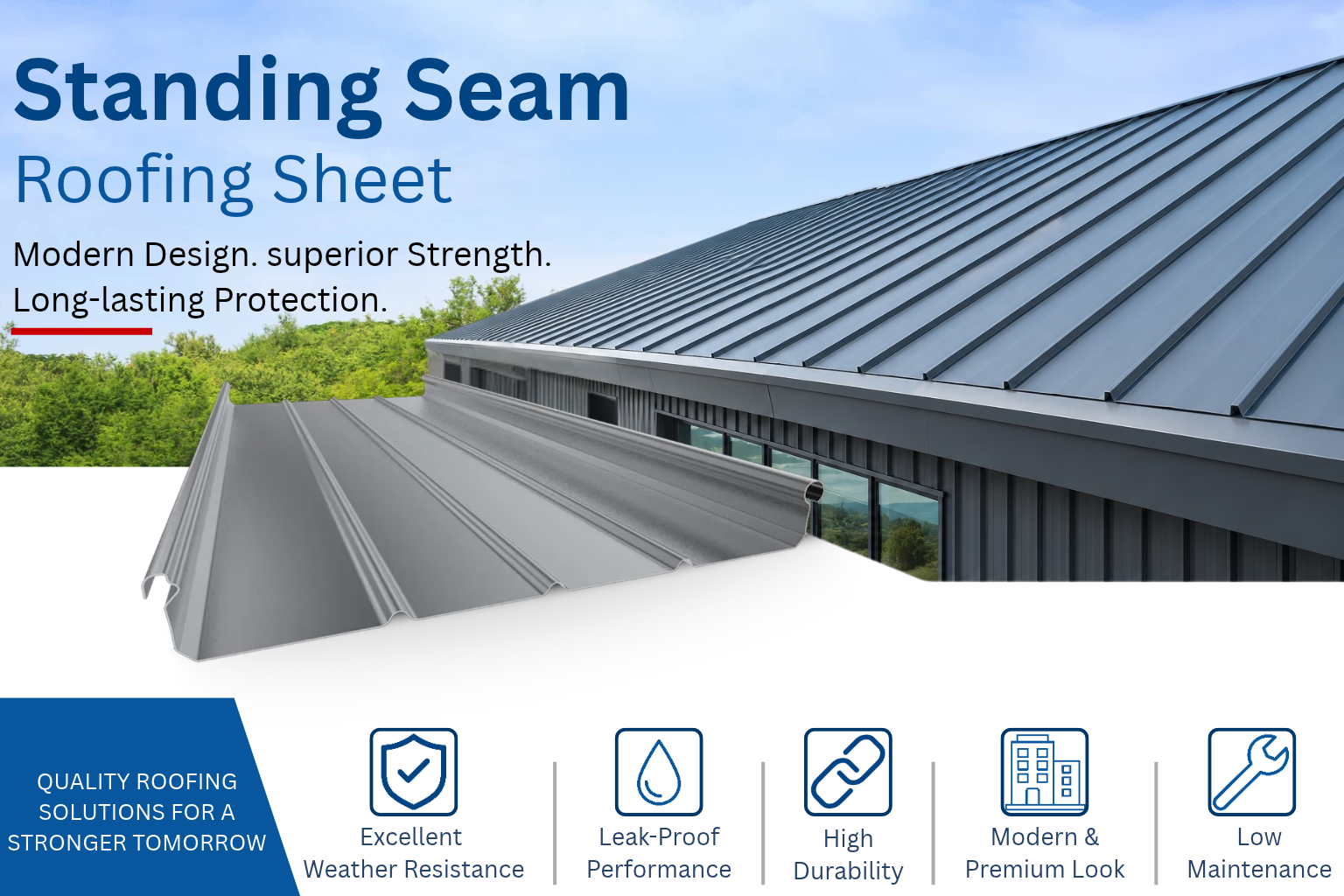
A roof does more than just cover a building. It protects what’s inside handles rainwater and keeps the structure strong for years.
Bhagwati Steel Building provides standing seam roofing for commercial projects across Gujarat.Planning a new factory, warehouse or production unit? Share your drawings and project requirements with Bhagwati Roofing Products for a suitable roofing solution. We’ll talk about material choices. Give you a quote for your specific project.
What Is Standing Seam Roofing?
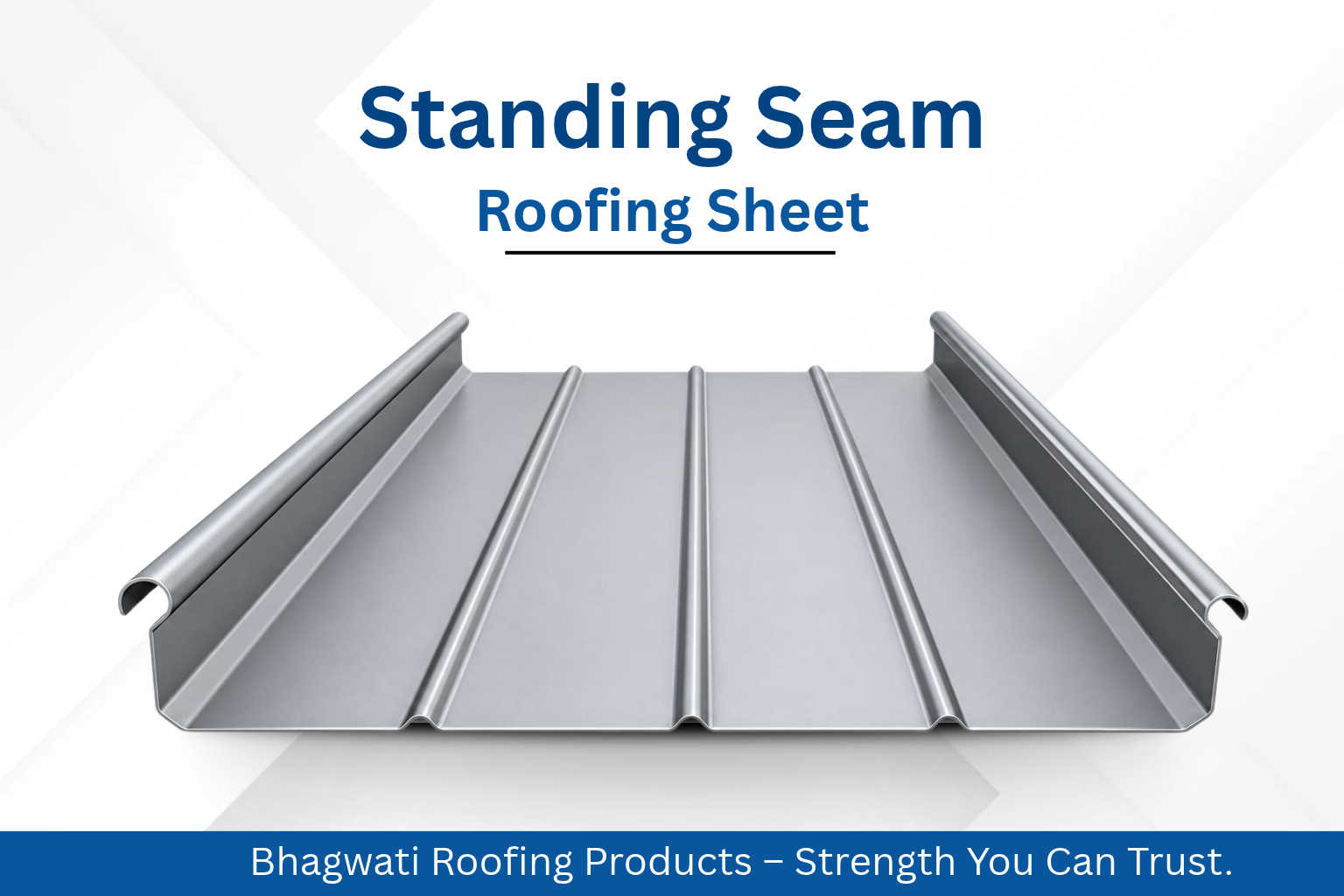
Standing seam roofing is a type of metal roof with raised seams that run along the roof’s length. The panels connect at these seams and clips hidden under the panels hold them to the roof structure.
This is different from metal roofs that have screws or bolts on the surface. With standing seam roofing there are holes in the main roof area. That means chance of leaks and a cleaner look. When designed and installed right it handles weather changes and expansion from heat and cold well.
Material Options and Specifications
The right material depends on the building location, exposure conditions, design requirements and preferred finish.
| Specification | Prepainted Galvanised Steel (PPGI) | Prepainted Galvalume Steel (PPGL) | Bare Galvalume Steel (BG) |
| Base metal | Cold-rolled steel | Cold-rolled steel | Cold-rolled steel |
| Yield strength | 340 MPa | 550 MPa | 550 MPa |
| Metallic coating mass | Z120 — 120 g/m² | AZ150 / AZ200 — 150 / 200 g/m² | AZ150 / AZ200 — 150 / 200 g/m² |
| Paint options | RMP, SMP or PVDF | RMP, SMP or PVDF | Unpainted |
| Surface finish | Matt or glossy | Matt or glossy | Natural metallic finish |
| Protective film | As specified for the order | As specified for the order | As specified for the order |
| Top coat dry film thickness | 18–20 microns, depending on paint system | 18–20 microns, depending on paint system | Not applicable |
| Back coat type | Epoxy, PU or polyester | Epoxy, PU or polyester | Not applicable |
| Back coat dry film thickness | 5–7 microns | 5–7 microns | Not applicable |
| Total coated thickness | 0.50 mm and above | 0.50 mm and above | 0.50 mm and above |
| Top surface colour | Selected from available colour card | Selected from available colour card | Natural metallic finish |
| Back coat colour | Grey, as per mill standard | Grey, as per mill standard | Not applicable |
Advantages of Standing Seam Roofing
1) Concealed Fastening
Standing seam roof panels use concealed clips for secure fastening, eliminating the need for exposed surface screws. This cuts down on places where water can get in.
2) Fewer End Joints
Longer panels mean places where panels meet at the ends. That makes it easier for rainwater to run off and reduces the number of joints that need checking.
3) Provision for Thermal Movement
Metal. Shrinks with temperature changes. The clip system lets the panels move a bit without coming
4) Clean Architectural Appearance
The straight continuous seams give the roof an orderly look. That’s good for both buildings and commercial spaces where appearance matters.
5) On-Site Roll Forming
For some projects panels can be made on site using machines. This lets you plan panel lengths to fit the roof without needing to ship sheets.
6) Insulation Compatibility
Standing seam roofing can be part of a roof with insulation. You should also plan for vapour control and ventilation to avoid condensation and keep indoor comfort good.
7) Practical Maintenance
Concealed fasteners reduce exposure to damage. However, regular inspections of seams, flashings, gutters and roof openings help maintain roof performance.
8) Standing Seam Roof Installation
Installation starts with checking the roof drawings, structure, slope and drainage. Then panel lengths, clips, flashings and other parts are planned.
Install the panels on the roof supports using the correct clips. Next, join the panel edges with specialised tools to create secure seams. Then, finish the ridge caps, gutters and roof openings before inspecting the completed roof.
Roof slope, support spacing, panel length and fastening must follow the design rules for the chosen system.
Applications
Standing seam roofing works well for types of buildings like:
- Warehouses and logistics centres
- Factories and production facilities
- Textile and processing units
- Automobile workshops and service centres
- Food processing buildings
- Aircraft hangars
- Exhibition and convention centres
- Auditoriums and commercial buildings
Planning a Standing Seam Roofing Project in Gujarat?
Choosing a roof starts with knowing your building. Where it is, how big the roof is, how the structure is built and how it will be used all affect what’s best.
Talk to Bhagwati Steel Building and share these details:
- Project location
- Roof drawings or dimensions
- Required material and thickness
- Preferred coating and colour
- Insulation requirements
- Supply and installation scope
- Expected project schedule
Talk to Bhagwati Steel Building about your standing seam roofing needs and ask for a custom quote.
Asked Questions
1) What determines the price of standing seam roofing?
The cost depends on the material, thickness, coating, panel shape how many you need, accessories, shipping. If installation is included. Roof drawings help get a quote.
2)Is it possible to manufacture standing seam panels on-site?
On-site roll forming requires sufficient space, equipment access and room to handle long panels. Plan these requirements before starting the roofing work.
3) Is standing seam roofing suitable, for low-slope roofs?
Some standing seam systems are made for slopes. The minimum slope needed depends on the profile, seam type and drainage plan.
4) Does standing seam roofing prevent leakage?
joined seams and hidden fasteners help stop water from getting in.. How well it works also depends on slope, flashings, roof openings, drainage, how well it’s installed and regular upkeep.
5) Can insulation be used with standing seam roofing?
Yes. The roof can be designed with insulation and proper vapour barriers to meet the building’s needs.